Clemson's Death Valley History (1990 - 2008)
==> View the 1973 - 1989 Years <==
After losing the Independence Bowl in 1985, Clemson rebounded fast, claiming three straight ACC championships from 1986–1988 and never falling out of the top 10. But after the streak ended in 1989, Danny Ford closed his Clemson chapter with a Gator Bowl win and stepped away from the program.
The Post-Sanctions Era of Memorial Stadium!
Coach Ford's replacement, Ken Hatfield, initially kept up the same success, winning the ACC title in 1991. He left for Rice in 1994 in a repeat of history; Clemson kept a cycle of either above or below average for the next two decades, halting their ACC dominance. The stadium even played host to the Carolina Panthers in their inaugural 1995 NFL season, going 7- 9.

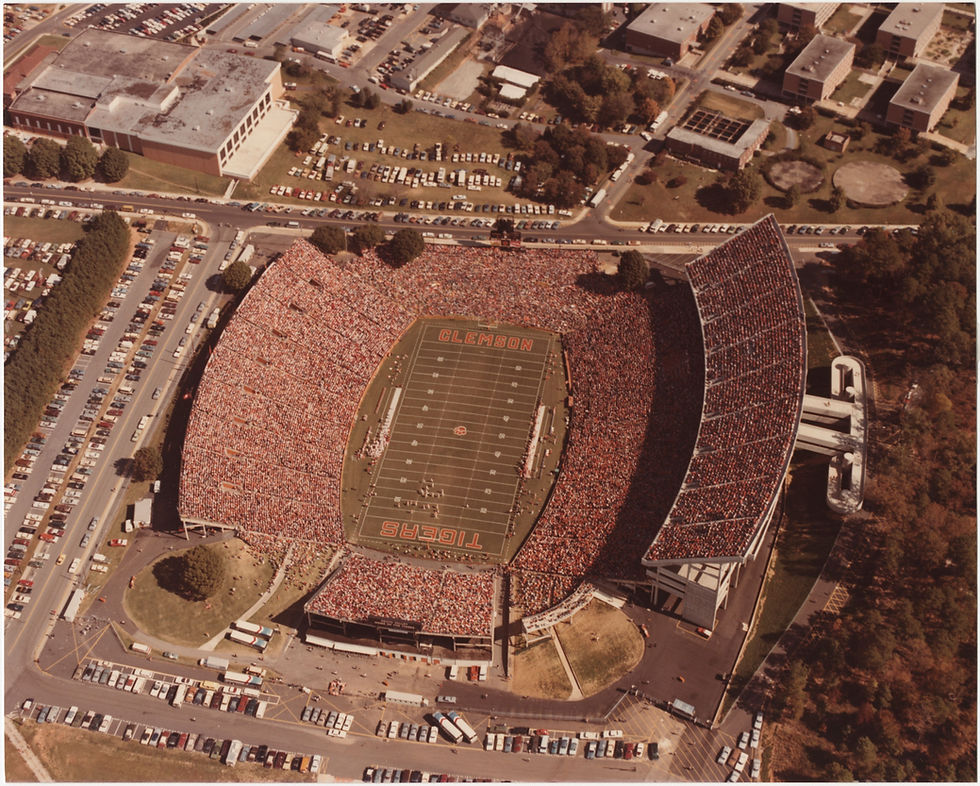
Despite being far from its peak, Clemson fans continued to show up in droves. In 1999, Memorial Stadium’s attendance record was shattered, and it’s a record that still stands to this day. 86,092 fans wanted to see the first Bowden Bowl, a coaching battle between father and son. With father Bobby Bowden (Florida State head coach) beating son Tommy Bowden (Clemson head coach) 17-14, Clemson showed incredible fight, almost beating the #1 team in the country.
While the Clemson football program went through a lull, the school continued to invest in the biggest trump card the program had left, its stadium. In 2006, after they beat Colorado in the Champ Sports Bowl, they added the WestZone, which, after years of Memorial Stadium upgrades serving the fans, balanced things out and served the student-athletes that help made Death Valley what it is. The project even finished early while still helping the fans out by giving them more restrooms and concessions.
Primarily, the WestZone project created a comprehensive home for Clemson’s student‑athletes, featuring expanded locker rooms twice the size of the originals, upgraded carpeting, photo montages depicting Clemson football heritage, new offices, a student‑athlete enrichment center, and a luxury club level with more than 1,000 seats. The seating capacity rose to 81,000, adding to what was one of the largest stadiums in the US.

“It is not a coincidence that the quality of our recruiting classes has improved dramatically since we began moving dirt and pouring mortar in the West End Zone of Memorial Stadium,” said Head Coach Tommy Bowden. “Our fans who follow the program closely see that in the recruiting service rankings, but I see it through personal contact with the quality of young men who are now considering and selecting Clemson. As we continue to build and eventually finish the WestZone Initiative, it will help us reach the championship-quality program we all strive for.”
They proved again in 2007 against Boston College that Clemson is ready for a championship-quality program. Clemson’s student body put Memorial Stadium in the Guinness Book of World Records when the crowd noise reached 133 decibels, breaking the loudest college football stadium record.
The passionate roars of the crowd in Memorial Stadium that day showed the incredible passion and hunger Tigers fans still had, despite their recent lack of major success. These passionate Clemson fans deserved a program that could match their passion with wins. Then the Clemson Tigers hired Dabo Swinney.