


Remembering Ted Turner: A Sportsman that Reshaped Teams, Television, & Fandom
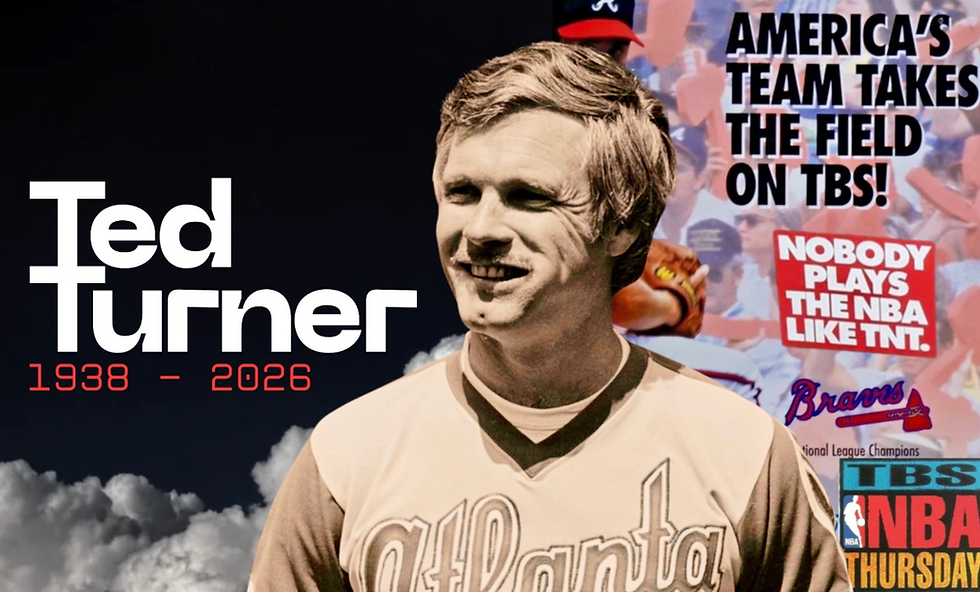
Image by Steven Kee, Stadium Journey
Ted Turner brought the instincts of a fan into the boardroom, and in doing so he rewired how sports were owned, packaged and consumed. His approach fused ownership with promotion: teams were not just assets but theatrical platforms to amplify competition, cement local identity and build national audiences. This mindset guided his moves from the Atlanta cityscape to living rooms across the country.
Ownership of Atlanta Braves, Atlanta Hawks, and WCW
Atlanta Braves (1976-1996): Turner made the Braves a national brand by turning team telecasts into signature programming for his superstation, helping propel the club through six division titles, four pennants, and World Series championship in 1995.
Atlanta Hawks (1977-1996): Turner purchased the struggling NBA team and kept them in town and saw them make 15 playoff appearances.
World Championship Wrestling (founded 1988 after buying Jim Crockett Promotions): Turner built WCW into a major televised wrestling rival to the WWF, fueling the explosive, ratings-driven “Monday Night Wars".
Revolutionizing How Sports Reached Fans
Turner’s superstation concept, sending a local Atlanta station via satellite to cable systems nationwide, made regional games nationally visible and created continuous sports programming beyond the stadium calendar. By using TBS and later TNT as distribution engines, he expanded exposure and revenue for franchises, helping transform franchises from local institutions into national brands and altering how leagues and broadcasters negotiated rights.
Sports Entertainment as Spectacle
Turner treated sports as programming that could educate, unify and entertain. He pushed production values, promoted marquee matchups and accepted (even courted) spectacle—most visibly with the WCW, where television-first thinking blurred sport and theater and lifted television wrestling into a ratings juggernaut for years. That era accelerated creative, financial and promotional strategies later adopted across televised sports and entertainment.
His hands-on style and publicity stunts sometimes provoked controversy (including a brief, halted episode when he managed a Braves game himself in 1977), but his readiness to spend, experiment and promote left concrete gains: a championship, packed broadcasts, and a sense that a local team could matter nationally. He later sold many assets into larger media structures, but the models he proved ,superstations, 24/7 sports windows, and high-profile cross-promotion endured.
Lasting impact
Turner’s legacy in sports is structural and cultural. Structurally, he helped create distribution and economic frameworks that made national fandom common; culturally, he showed that ownership can be loud, performative and intimate with fans. Whether through the Braves rise, the Hawks and WCW’s national moments, or the constant presence of sports on cable, his imprint persists in how games are presented, monetized and felt by millions.
May 6, 2026 marks the end of a singular chapter in sports-media history: a proprietor who loved the game out loud and who changed where and how fans watched.

